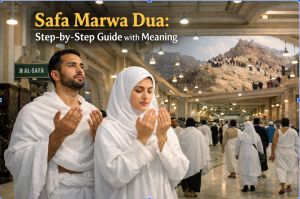
Safa and Marwa hold a special place in the hearts of Muslims worldwide, especially during Hajj and Umrah. The ritual of Sa’i, walking between these sacred hills, commemorates the devotion and perseverance of Hajar (peace be upon her), the wife of Prophet Ibrahim (peace be upon him), in her search for water. Learning how to perform Sa’i and the du’as recited, along with their meanings, enhances both spiritual fulfillment and the devotion required for these rites.
The Significance of Safa and Marwa
Safa and Marwa are hills within the Masjid al-Haram in Makkah. According to Islamic tradition, Hajar ran between them seven times, seeking water after Prophet Ibrahim (peace be upon him) left her and her son by Allah’s command. Sa’i honors her trust, patience, and dedication. Performing Sa’i is required for both Hajj and Umrah, making it an essential ritual.
Understanding Sa’i
Sa’i literally means “to strive or hasten,” and it involves walking briskly between Safa and Marwa seven times, starting at Safa and ending at Marwa. Each walk or run symbolizes Hajar’s emotional and spiritual struggle, representing her unshakable faith in Allah’s plan. During Sa’i, pilgrims often recite supplications (du’as), seeking Allah’s mercy, forgiveness, and blessings. It is a moment of reflection, gratitude, and intense spiritual connection.
Steps to Perform Sa’i
Performing Sa’i may seem simple, but it requires understanding the proper steps to ensure that the ritual is performed correctly. Here is a step-by-step guide:
1. Begin at Safa
- Facing the Kaaba, stand at the top of Safa hill.
- Raise your hands, if possible, and recite the niyyah (intention) for Sa’i:
“I intend to perform Sa’i between Safa and Marwa for Umrah/Hajj fardh.” - Begin by praying or making any personal supplications before starting the Sa’i.
2. First Walk to Marwa
- Walk from Safa to Marwa at a moderate pace.
- Men are encouraged to run briskly in the marked area known as Mataf, situated between the two green lights, which indicates the area where Hajar ran.
- Women may walk at a normal pace.
- Recite du’as, Qur’an verses, or personal prayers while walking.
3. Reaching Marwa
- Upon reaching Marwa, face the Kaaba and praise Allah.
- You may recite du’as like:
“Rabbighfir warham wa anta khayru ar-rahimeen” (O Allah, forgive and have mercy, You are the best of those who show mercy).
4. Return to Safa
- Turn around and walk back to Safa.
- This completes the second leg of Sa’i.
- Recite du’as or reflect on Hajar’s patience.
5. Complete Seven Circuits
- Repeat the journey between Safa and Marwa until you complete seven circuits.
- Always start at Safa and end at Marwa for each circuit.
- Maintain sincere intention and seek closeness to Allah throughout the ritual.
6. Completing Sa’i
- After the seventh trip, stand at Marwa and make final supplications, thanking Allah for His guidance and mercy.
- It is recommended to pray two rak’ahs after finishing Sa’i to complete this portion of the ritual with worship.
Du’as for Sa’i and Their Meaning
Reciting du’as during Sa’i fulfills Sunnah and strengthens spiritual focus. Common du’as include:
- Dua for patience and help:
“Rabbighfir warham wa anta khayru ar-rahimeen.”
Meaning: “O Allah, forgive and have mercy, You are the best of those who show mercy.” - Dua for protection:
“Allahumma inni as’aluka rizqan tayyiban, wa ‘ilman nafi’an, wa ‘amalan mutaqabbalan”
Meaning: “O Allah, I ask You for good sustenance, beneficial knowledge, and accepted deeds.” - Dua for guidance:
“Allahumma ihdini li-sirat al-mustaqim”
Meaning: “O Allah, guide me to the straight path.”
Recite du’as silently or aloud based on comfort. These keep focus on Allah during Sa’i.
Tips for Performing Sa’i Correctly
- Wear comfortable footwear, as Sa’i involves a lot of walking. Sandals are preferred for Umrah.
- Stay hydrated, carrying water if needed. Zamzam water is available along the Sa’i route.
- Focus spiritually and avoid distractions like phones or idle conversation.
- Follow crowd rules, stay patient, and move with the flow for safety.
- Timing: Sa’i can be performed any time during Umrah or Hajj after performing Tawaf. Avoid rushing it; take your time to reflect and connect spiritually.
Common Mistakes to Avoid
- Not making a proper intention (niyyah) before starting Sa’i.
- Skipping the running area for men without a reason.
- Ending Sa’i before completing all seven trips.
- Understand the du’as you recite to make them more heartfelt and meaningful.
Spiritual Benefits of Sa’i
Sa’i is more than a physical act; it is an exercise in faith and patience. Pilgrims report feeling renewed closeness to Allah and spiritual cleansing, reminded of the value of persistence and trust in life’s trials.
Sa’i During Hajj and Umrah
Sa’i is required for Hajj and Umrah; it is especially important for Umrah. Planning, focus, and proper recitation of du’a improve the spiritual experience.
For Muslims planning their journey, it’s wise to choose reliable Umrah packages. If you are looking to book umrah packages 2026 from the UK, ensure the package provides guidance for performing Sa’i correctly and includes support throughout your stay in Makkah.
Conclusion
Safa Marwa Dua and the ritual of Sa’i are core parts of Hajj and Umrah, reflecting the patience and devotion shown by Hajar. By learning the correct steps, reciting meaningful du’as, and focusing on spiritual intent, pilgrims can make their journey deeply transformative. Sa’i reminds believers that true faith requires perseverance and continual reliance on Allah.
Whether performing Umrah for the first time or returning to Makkah, following this comprehensive guide ensures that your Sa’i is correct, meaningful, and sincere. Let each step between Safa and Marwa draw you closer to Allah with gratitude and hope.
About the Author